| Key Atributes | Values | Key Atributes | Values |
| Color Temperature | 4300k-6000k & Cusztomized | Luminous Efficacy | Customized. We can design high luminous efficiency according to request |
| Width/Length | Customized | Warranty | 5 years/3 years customized |
| Brand Name | GUOLI / Customized | Emitting Color | Customized |
| Lens | Water proof | Available option, We have process of applying waterproofing adhesive | |
| Radiator | CRI | 70/80/90 | |
| Certification | UL(CUL), IS09001&IS014001, IATF16949, REACH, RoHS | PCB surface process | OSP/HASL |
| Copper thickness | 0.5-3oz | PCB material | FR-4/Aluminum |
| Input | DC | Light Source | LED |
| Support Dimmer | Available | Board Thickness | 0.2-4mm |
| DOB | Available | Service | One-stop turnkey service |
| LED CHIPS | Brand option: CREE,OSRAM,PHILIPS,NICHIA.,etc | Colour Accuracy Initially | Min. 3 SDCM |
| Power | Customized | ZHAGA | Available |
Our automotive lighting (headlights, taillights, daytime running lights, etc.) parameters and design solutions take into account three core aspects: regulatory compliance, lighting safety, and weather resistance and reliability. We can design according to the requirements of different lighting types.
I. Core Optical Parameter Requirements
1. Color Rendering Index (CRI, Ra) – Headlights are the core indicator.
The CRI of automotive lighting directly affects the ability to recognize obstacles, road signs, and pedestrians at night. Different lighting types have different requirements:
* Headlights (low beam/high beam): Ra ≥ 80, some high-end models require Ra ≥ 85, and R9 (red light CRI) ≥ 0, ensuring clear recognition of key targets such as red taillights and warning signs;
* Taillights/Brake lights/Turn signals: Primarily monochromatic light (red, yellow), Ra is not a primary concern; the focus is on ensuring the purity and visibility of the monochromatic light;
* Daytime running lights: Mostly white light, Ra ≥ 70 is sufficient for basic visual recognition.
2. Luminous Efficacy – Balancing Brightness and Energy Consumption
Automotive headlight luminous efficacy needs to be differentiated based on system luminous efficacy (including lens and reflector losses). The core objective is to achieve the required illuminance under low power consumption:
LED Headlights: Chip luminous efficacy ≥ 150 lm/W, system luminous efficacy (including optical component losses) ≥ 80 lm/W; in high beam mode, center illuminance must be ≥ 20000 cd (candela) to meet long-distance illumination requirements;
Taillight/Daytime Running Lights: System luminous efficacy ≥ 60 lm/W, prioritizing warning visibility, without excessively high brightness;
Key Supplement: Luminous efficacy must be considered in conjunction with thermal stability. At high temperatures (lamp cavity temperature can reach 120℃), the luminous efficacy attenuation rate must be ≤ 15% to avoid sudden drops in brightness while driving.
3. Color Temperature (CCT) – Strictly Regulated Range
The color temperature of automotive headlights directly affects light penetration and visual comfort. Regulations explicitly prohibit excessively high color temperatures (which easily cause glare and poor penetration in rain and fog):
Headlights (Low Beam/High Beam): 4300K~6000K, with around 5000K (neutral white light) being preferred;
4300K: Warm white light, strong penetration in rain and fog, suitable for rainy and foggy areas;
6000K: Pure white light, high clarity at night, but weak penetration in rain and fog. Regulations in some areas limit the upper limit to 6000K;
Cool white light >6000K is prohibited (high proportion of blue light, severe glare, affecting oncoming vehicles);
Taillights/Brake Lights: Monochromatic red light (wavelength 620~660nm), no color temperature concept; Turn signals are monochromatic yellow light (wavelength 585~595nm).
4. Other Key Regulatory Parameters
* Illuminance Uniformity: The low beam of the headlights must meet the "cut-off line" requirement to avoid glare; the illuminance in the oncoming lane should be ≤200 cd/m².
* Beam Pattern: The headlights must achieve a precise beam pattern through a lens/reflector (e.g., European standard ECE beam pattern, American standard SAE beam pattern).
* Lifespan: The lifespan of the LED L70 headlights should be ≥30,000 hours, meeting the vehicle's lifespan (approximately 10 years).
II. Key Considerations for Light Source Design
* Regulatory Compliance First* All headlights must comply with national/international standards for beam pattern, illuminance, and color temperature, and must pass 3C certification (China) and ECE certification (Europe) before installation.
* The low beam of the headlights must be designed with a cut-off line to prevent glare from direct light hitting oncoming drivers; the daytime running light brightness must be controlled between 100 and 200 cd to avoid excessive glare.
High Temperature Resistance and Heat Dissipation Design (Core Challenges)
Automotive lamp housing temperatures can reach 80-120℃ during driving (even higher after exposure to summer sun). LED chip junction temperatures must be controlled to ≤150℃, otherwise light decay will accelerate and lifespan will be shortened.
Heat Dissipation Solutions:
Small to Medium Power Headlights (Daytime Running Lights, Taillights): Aluminum substrate + thermally conductive adhesive is used for direct heat dissipation against the lamp housing.
High Power Headlights: A combination of heat pipe cooling and finned cooling is used; some high-end models employ liquid cooling to ensure efficient heat dissipation.
Avoid conflicts between the heat dissipation structure and the airflow channels within the lamp housing to prevent dust and moisture accumulation.
Weather Resistance and Protection Design
Protection Rating: Must meet IP6K9K (dustproof + high-pressure water jet protection) to withstand rain, car washes, sandstorms, and other environmental conditions;
Material Weather Resistance: The LED chip encapsulation adhesive must be UV-resistant silicone/epoxy resin to prevent yellowing and cracking after prolonged exposure to sunlight; the PCB board must be coated with conformal coating to resist oil and moisture corrosion from the engine compartment;
Vibration Resistance: Meets automotive-grade vibration standards (≥10g acceleration); the soldering of the LED chips to the substrate must use high-temperature solder (melting point ≥260℃) to prevent solder joint detachment due to vibration.
Precise Optical System Matching
Headlights: LED light sources must be paired with high-precision light distribution lenses (PMMA material, light transmittance ≥92%) or reflectors (vacuum-plated aluminum, reflectivity ≥95%) to achieve the required light pattern according to regulations;
Taillights: Mostly employ light guide strips + diffuser designs to ensure light uniformity and avoid "bright spots and dark areas";
Avoid scratches and stains on the surface of optical components, as these will severely affect light efficiency and light pattern.
Power Supply and Electromagnetic Compatibility (EMC)
Automotive power supply voltage fluctuates greatly (12V system voltage range 9~16V), requiring a wide-voltage constant current drive with output current accuracy ≤±3% to avoid brightness changes caused by voltage fluctuations;
EMC certification is required to prevent interference from the headlight drive circuit to onboard radar, navigation, and other electronic devices.
III. Lamp Chip Selection
Automotive headlight lamp chips must meet automotive-grade reliability standards (AEC-Q102 certification). The mainstream choices are high-power SMD surface-mount chips, imitation lumen chips, and COB integrated chips. The selection varies depending on the type of headlight:
1. Headlight-Specific Lamp Chips
Imitation Lumen High-Power Chips (Mainstream Choice)
Specifications: Single chip power 3~5W, luminous flux ≥300lm/chip, precise wavelength (white light 5000K±200K);
Advantages: Good monochromaticity, easy to achieve precise beam pattern when paired with reflectors/lenses; strong temperature resistance, operating junction temperature ≤150℃;
Representative Models: Osram OSLON SSL 150, Philips Luxeon TX;
COB Integrated Chips (High-End Models)
Specifications: Single chip power 10~30W, luminous surface size... Φ5~Φ10mm, luminous efficacy ≥140lm/W;
Advantages: Uniform light output, easy light pattern control, suitable for matrix headlights (such as adaptive headlights in Mercedes-Benz and BMW);
Note: Requires a dedicated cooling system to prevent overheating in the central area.
2. Taillight/Daytime Running Light Dedicated LED Chips
2835/3030 SMD Low-Power LED Chips
Specifications: Single chip power 0.2~0.5W, beam angle 120°, red/yellow/white light optional;
Advantages: Small size, suitable for high-density arrangement, low cost, good vibration resistance;
Suitable for: Taillights, brake lights, turn signals, daytime running lights;
Side-emitting LED Chips (Dedicated to Light Guide Strips)
Specifications: Thin design (thickness ≤1mm), light emission direction perpendicular to the substrate, suitable for embedding in taillight light guide strips;
Advantages: High light coupling efficiency, uniform light output from the light guide strip with no dark areas.
3. Core Requirements for Automotive-Grade Lamp Chips
Must pass AEC-Q102 certification (Automotive Electronic Components Reliability Certification), and meet wide operating temperature range of -40℃ to 125℃;
Damp heat resistance: Meets 1000-hour aging test at 85℃/85% RH, with luminous efficacy attenuation ≤10%;
Vibration resistance: Meets 10~2000Hz vibration test, with no solder joint detachment or abnormal luminous decay.
Application
headlights, taillights, daytime running lights, etc.
Our Company Profile
Guoli Optoelectronics has more than 10 years experiences in PCB, PCBA design and manufacturing, especially in LED application, we have strong engineers team for software and hardware development, and with 50+ patents in PCB products. We have 4 manufacturing bases and 600+ staffs, strong production capacity and fast response to make sure your project run efficiently. We have thousands of successful customers and cases globally, and serving the brands in industry worldwide.
We have complete quality control system and management system to keep our product quality, including UL, Rohs, ISO9001, ISO14001 and IATF16949.
Our Advantages
1. Save Time and Costs: GUOLI provides PCB design, sourcing, assembly, testing, and after-sales services, reducing communication and delivery time with different suppliers, improving efficiency, and lowering costs.
2. Reduce Errors: PCB design and assembly defects can cause project delays. GUOLI's one-stop PCBA service reduces various errors, including design, sourcing, and assembly mistakes, thereby improving quality control.
3. Strong Technical Team: GUOLI's one-stop PCBA service is typically equipped with an experienced technical team to help customers solve various technical problems and ensure timely project completion.
4. Unified Warranty and After-Sales Service: GUOLI's one-stop PCBA service provides unified warranty and after-sales service, helping to build long-term partnerships and achieve mutual benefit.
5. Customized Services: GUOLI's one-stop PCBA service can provide more personalized services based on customers' specific needs and requirements, and develop suitable circuit boards and system components.
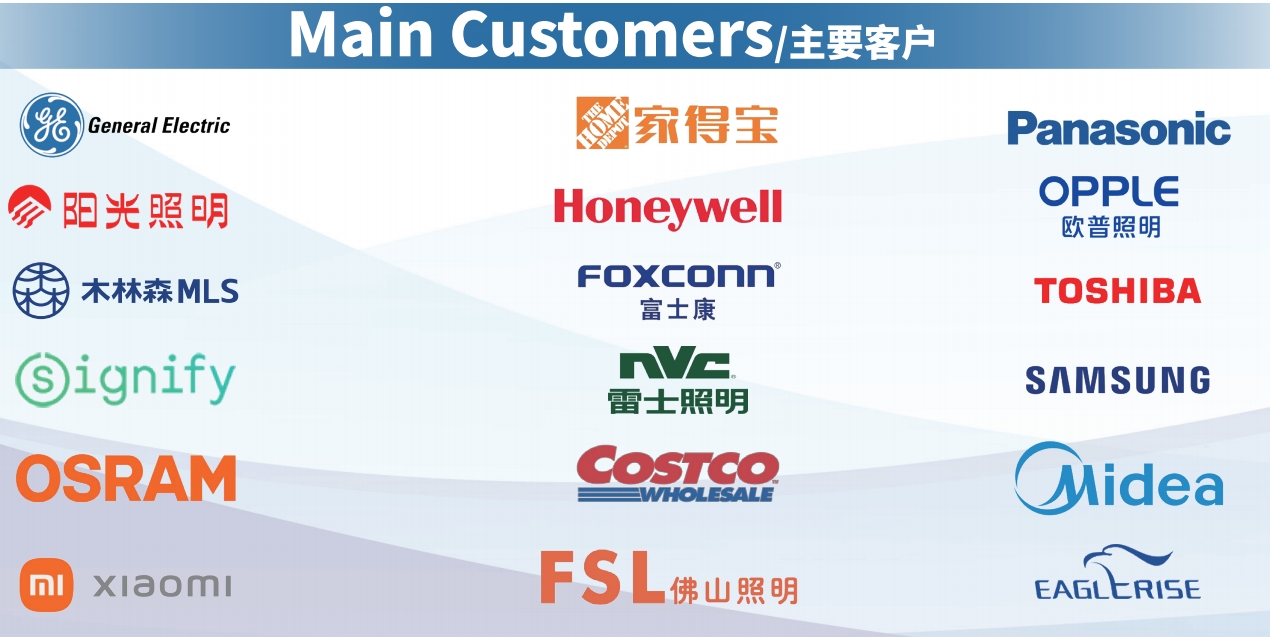
Our Customers Reference
Our PCB Prodcution Site
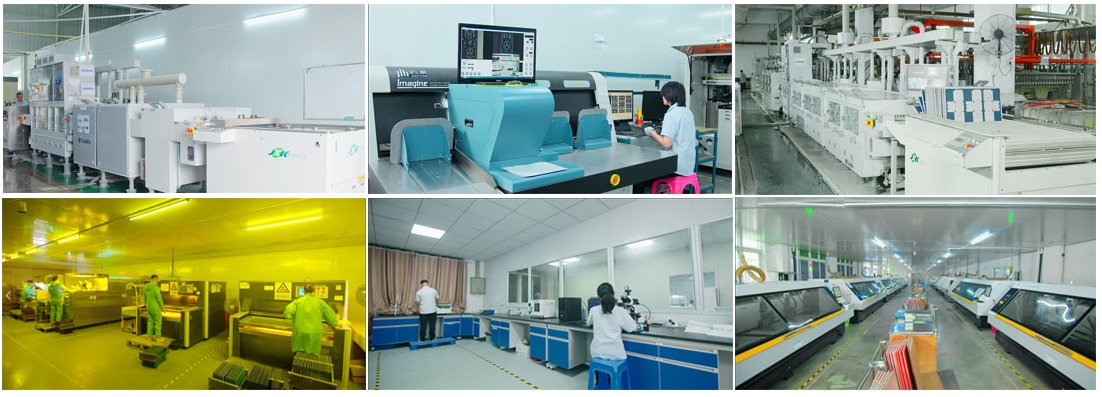
Our PCBA Prodcution Site

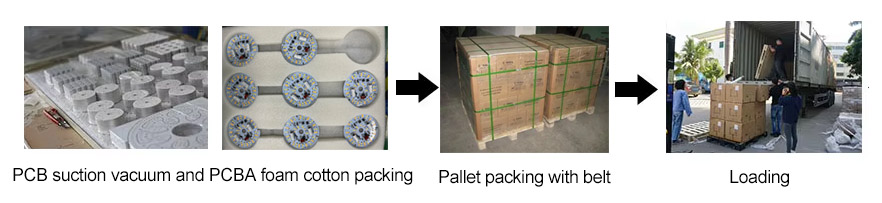
Packing and Shiping
| Key Atributes | Values | Key Atributes | Values |
| Color Temperature | 4300k-6000k & Cusztomized | Luminous Efficacy | Customized. We can design high luminous efficiency according to request |
| Width/Length | Customized | Warranty | 5 years/3 years customized |
| Brand Name | GUOLI / Customized | Emitting Color | Customized |
| Lens | Water proof | Available option, We have process of applying waterproofing adhesive | |
| Radiator | CRI | 70/80/90 | |
| Certification | UL(CUL), IS09001&IS014001, IATF16949, REACH, RoHS | PCB surface process | OSP/HASL |
| Copper thickness | 0.5-3oz | PCB material | FR-4/Aluminum |
| Input | DC | Light Source | LED |
| Support Dimmer | Available | Board Thickness | 0.2-4mm |
| DOB | Available | Service | One-stop turnkey service |
| LED CHIPS | Brand option: CREE,OSRAM,PHILIPS,NICHIA.,etc | Colour Accuracy Initially | Min. 3 SDCM |
| Power | Customized | ZHAGA | Available |
Our automotive lighting (headlights, taillights, daytime running lights, etc.) parameters and design solutions take into account three core aspects: regulatory compliance, lighting safety, and weather resistance and reliability. We can design according to the requirements of different lighting types.
I. Core Optical Parameter Requirements
1. Color Rendering Index (CRI, Ra) – Headlights are the core indicator.
The CRI of automotive lighting directly affects the ability to recognize obstacles, road signs, and pedestrians at night. Different lighting types have different requirements:
* Headlights (low beam/high beam): Ra ≥ 80, some high-end models require Ra ≥ 85, and R9 (red light CRI) ≥ 0, ensuring clear recognition of key targets such as red taillights and warning signs;
* Taillights/Brake lights/Turn signals: Primarily monochromatic light (red, yellow), Ra is not a primary concern; the focus is on ensuring the purity and visibility of the monochromatic light;
* Daytime running lights: Mostly white light, Ra ≥ 70 is sufficient for basic visual recognition.
2. Luminous Efficacy – Balancing Brightness and Energy Consumption
Automotive headlight luminous efficacy needs to be differentiated based on system luminous efficacy (including lens and reflector losses). The core objective is to achieve the required illuminance under low power consumption:
LED Headlights: Chip luminous efficacy ≥ 150 lm/W, system luminous efficacy (including optical component losses) ≥ 80 lm/W; in high beam mode, center illuminance must be ≥ 20000 cd (candela) to meet long-distance illumination requirements;
Taillight/Daytime Running Lights: System luminous efficacy ≥ 60 lm/W, prioritizing warning visibility, without excessively high brightness;
Key Supplement: Luminous efficacy must be considered in conjunction with thermal stability. At high temperatures (lamp cavity temperature can reach 120℃), the luminous efficacy attenuation rate must be ≤ 15% to avoid sudden drops in brightness while driving.
3. Color Temperature (CCT) – Strictly Regulated Range
The color temperature of automotive headlights directly affects light penetration and visual comfort. Regulations explicitly prohibit excessively high color temperatures (which easily cause glare and poor penetration in rain and fog):
Headlights (Low Beam/High Beam): 4300K~6000K, with around 5000K (neutral white light) being preferred;
4300K: Warm white light, strong penetration in rain and fog, suitable for rainy and foggy areas;
6000K: Pure white light, high clarity at night, but weak penetration in rain and fog. Regulations in some areas limit the upper limit to 6000K;
Cool white light >6000K is prohibited (high proportion of blue light, severe glare, affecting oncoming vehicles);
Taillights/Brake Lights: Monochromatic red light (wavelength 620~660nm), no color temperature concept; Turn signals are monochromatic yellow light (wavelength 585~595nm).
4. Other Key Regulatory Parameters
* Illuminance Uniformity: The low beam of the headlights must meet the "cut-off line" requirement to avoid glare; the illuminance in the oncoming lane should be ≤200 cd/m².
* Beam Pattern: The headlights must achieve a precise beam pattern through a lens/reflector (e.g., European standard ECE beam pattern, American standard SAE beam pattern).
* Lifespan: The lifespan of the LED L70 headlights should be ≥30,000 hours, meeting the vehicle's lifespan (approximately 10 years).
II. Key Considerations for Light Source Design
* Regulatory Compliance First* All headlights must comply with national/international standards for beam pattern, illuminance, and color temperature, and must pass 3C certification (China) and ECE certification (Europe) before installation.
* The low beam of the headlights must be designed with a cut-off line to prevent glare from direct light hitting oncoming drivers; the daytime running light brightness must be controlled between 100 and 200 cd to avoid excessive glare.
High Temperature Resistance and Heat Dissipation Design (Core Challenges)
Automotive lamp housing temperatures can reach 80-120℃ during driving (even higher after exposure to summer sun). LED chip junction temperatures must be controlled to ≤150℃, otherwise light decay will accelerate and lifespan will be shortened.
Heat Dissipation Solutions:
Small to Medium Power Headlights (Daytime Running Lights, Taillights): Aluminum substrate + thermally conductive adhesive is used for direct heat dissipation against the lamp housing.
High Power Headlights: A combination of heat pipe cooling and finned cooling is used; some high-end models employ liquid cooling to ensure efficient heat dissipation.
Avoid conflicts between the heat dissipation structure and the airflow channels within the lamp housing to prevent dust and moisture accumulation.
Weather Resistance and Protection Design
Protection Rating: Must meet IP6K9K (dustproof + high-pressure water jet protection) to withstand rain, car washes, sandstorms, and other environmental conditions;
Material Weather Resistance: The LED chip encapsulation adhesive must be UV-resistant silicone/epoxy resin to prevent yellowing and cracking after prolonged exposure to sunlight; the PCB board must be coated with conformal coating to resist oil and moisture corrosion from the engine compartment;
Vibration Resistance: Meets automotive-grade vibration standards (≥10g acceleration); the soldering of the LED chips to the substrate must use high-temperature solder (melting point ≥260℃) to prevent solder joint detachment due to vibration.
Precise Optical System Matching
Headlights: LED light sources must be paired with high-precision light distribution lenses (PMMA material, light transmittance ≥92%) or reflectors (vacuum-plated aluminum, reflectivity ≥95%) to achieve the required light pattern according to regulations;
Taillights: Mostly employ light guide strips + diffuser designs to ensure light uniformity and avoid "bright spots and dark areas";
Avoid scratches and stains on the surface of optical components, as these will severely affect light efficiency and light pattern.
Power Supply and Electromagnetic Compatibility (EMC)
Automotive power supply voltage fluctuates greatly (12V system voltage range 9~16V), requiring a wide-voltage constant current drive with output current accuracy ≤±3% to avoid brightness changes caused by voltage fluctuations;
EMC certification is required to prevent interference from the headlight drive circuit to onboard radar, navigation, and other electronic devices.
III. Lamp Chip Selection
Automotive headlight lamp chips must meet automotive-grade reliability standards (AEC-Q102 certification). The mainstream choices are high-power SMD surface-mount chips, imitation lumen chips, and COB integrated chips. The selection varies depending on the type of headlight:
1. Headlight-Specific Lamp Chips
Imitation Lumen High-Power Chips (Mainstream Choice)
Specifications: Single chip power 3~5W, luminous flux ≥300lm/chip, precise wavelength (white light 5000K±200K);
Advantages: Good monochromaticity, easy to achieve precise beam pattern when paired with reflectors/lenses; strong temperature resistance, operating junction temperature ≤150℃;
Representative Models: Osram OSLON SSL 150, Philips Luxeon TX;
COB Integrated Chips (High-End Models)
Specifications: Single chip power 10~30W, luminous surface size... Φ5~Φ10mm, luminous efficacy ≥140lm/W;
Advantages: Uniform light output, easy light pattern control, suitable for matrix headlights (such as adaptive headlights in Mercedes-Benz and BMW);
Note: Requires a dedicated cooling system to prevent overheating in the central area.
2. Taillight/Daytime Running Light Dedicated LED Chips
2835/3030 SMD Low-Power LED Chips
Specifications: Single chip power 0.2~0.5W, beam angle 120°, red/yellow/white light optional;
Advantages: Small size, suitable for high-density arrangement, low cost, good vibration resistance;
Suitable for: Taillights, brake lights, turn signals, daytime running lights;
Side-emitting LED Chips (Dedicated to Light Guide Strips)
Specifications: Thin design (thickness ≤1mm), light emission direction perpendicular to the substrate, suitable for embedding in taillight light guide strips;
Advantages: High light coupling efficiency, uniform light output from the light guide strip with no dark areas.
3. Core Requirements for Automotive-Grade Lamp Chips
Must pass AEC-Q102 certification (Automotive Electronic Components Reliability Certification), and meet wide operating temperature range of -40℃ to 125℃;
Damp heat resistance: Meets 1000-hour aging test at 85℃/85% RH, with luminous efficacy attenuation ≤10%;
Vibration resistance: Meets 10~2000Hz vibration test, with no solder joint detachment or abnormal luminous decay.
Application
headlights, taillights, daytime running lights, etc.
Our Company Profile
Guoli Optoelectronics has more than 10 years experiences in PCB, PCBA design and manufacturing, especially in LED application, we have strong engineers team for software and hardware development, and with 50+ patents in PCB products. We have 4 manufacturing bases and 600+ staffs, strong production capacity and fast response to make sure your project run efficiently. We have thousands of successful customers and cases globally, and serving the brands in industry worldwide.
We have complete quality control system and management system to keep our product quality, including UL, Rohs, ISO9001, ISO14001 and IATF16949.
Our Advantages
1. Save Time and Costs: GUOLI provides PCB design, sourcing, assembly, testing, and after-sales services, reducing communication and delivery time with different suppliers, improving efficiency, and lowering costs.
2. Reduce Errors: PCB design and assembly defects can cause project delays. GUOLI's one-stop PCBA service reduces various errors, including design, sourcing, and assembly mistakes, thereby improving quality control.
3. Strong Technical Team: GUOLI's one-stop PCBA service is typically equipped with an experienced technical team to help customers solve various technical problems and ensure timely project completion.
4. Unified Warranty and After-Sales Service: GUOLI's one-stop PCBA service provides unified warranty and after-sales service, helping to build long-term partnerships and achieve mutual benefit.
5. Customized Services: GUOLI's one-stop PCBA service can provide more personalized services based on customers' specific needs and requirements, and develop suitable circuit boards and system components.
Our Customers Reference

Our PCB Prodcution Site

Our PCBA Prodcution Site

Packing and Shiping

content is empty!