close
Choose Your Site
Global
Social Media


| Key Atributes | Values | Key Atributes | Values |
| Color Temperature | Luminous Efficacy | Customized. We can design high luminous efficiency according to request | |
| Width/Length | Customized | Warranty | 5 years/3 years customized |
| Brand Name | GUOLI / Customized | Emitting Color | Customized |
| ens | Water proof | Available option, We have process of applying waterproofing adhesive | |
| Radiator | CRI | ||
| Certification | UL(CUL), IS09001&IS014001, IATF16949, REACH, RoHS | PCB surface process | OSP/HASL |
| Copper thickness | 0.5-3oz | PCB material | FR-4/Aluminum |
| Input | DC/AC | Light Source | LED |
| Support Dimmer | Available | Board Thickness | 0.2-4mm |
| DOB | Available | Service | One-stop turnkey service |
| LED CHIPS | Brand option: CREE,OSRAM,PHILIPS,NICHIA.,etc | Colour Accuracy Initially | Min. 3 SDCM |
| Power | Customized | ZHAGA | Available |
Product Features
* Excellent heat dissipation. Focused thermal management under high power conditions.
* Resistant to UV aging, high stability, maintaining optical efficiency.
* Precise electrical control, modular design adaptable to printer processes.
* Reliability and process adaptability meet the long-term operating requirements of printers.
Our printer curing LED module solution is primarily used in UV inkjet printers, 3D printers (photocuring), and other similar devices. Its core function is to rapidly cure inks and photosensitive resins using specific wavelengths of ultraviolet/visible light. Parameter design and LED selection are closely focused on curing efficiency, uniformity of curing effect, and equipment compatibility.
I. Core Optical Parameter Requirements
1. Luminous Efficacy – Emphasis on Curing Energy Efficiency (Optical Power Density)
Printer curing lamps do not focus on the lumen efficiency (lm/W) of conventional lighting. The core indicators are optical power density (mW/cm²) and photoelectric conversion efficiency, which directly determine curing speed and energy consumption:
UV Inkjet Printer Curing Lamp:
Wavelength 365nm/395nm/405nm, optical power density ≥800mW/cm², ensuring instant curing of ink during high-speed printing and preventing ink smearing; Photoelectric conversion efficiency ≥30% (LED light source), reducing equipment operating power consumption.
3D Printer (LCD/DLP/SLA) Curing Lamps:
SLA/DLP Models (UV Curing): 405nm wavelength is the mainstream, with a light power density ≥100mW/cm² to ensure resin layer curing depth (typically 0.025~0.1mm/layer);
LCD Models: Require a highly uniform surface light source, with a light power density deviation ≤±5% to avoid incomplete curing in certain areas of the model.
Additional Note: Some devices will specify irradiance uniformity, requiring ≥90% to ensure no "curing blind spots" on the printed/cured surfaces.
2. Core Process Parameters
Wavelength Accuracy: Deviation must be ≤ ±3nm. For example, the wavelength of commonly used 405nm LEDs in 3D printing needs to be controlled within 402~408nm; otherwise, the photosensitive resin curing reaction will fail.
Curing Response Speed: The LED curing lamp must support instantaneous start-up (≤1ms) to adapt to the high-frequency start-stop requirements of the printer, eliminating the need for preheating.
Lifespan Stability: L70 lifespan ≥ 20,000 hours, and wavelength drift ≤ ±2nm after long-term use to avoid print quality degradation.
II. Key Aspects of Our Light Source Design
Precise Wavelength Matching for Photosensitive Materials
UV Ink Curing: 395nm/405nm near-ultraviolet light is preferred due to its strong penetration, fast curing speed, and good compatibility with ink components; 365nm deep ultraviolet light is suitable for inks with high adhesion, but the equipment cost is higher.
3D Printing Photosensitive Resin Curing:
Ordinary Resins: Adapted to 405nm near-ultraviolet light, with low cost and high curing efficiency;
High-Precision Resins: Some use 365nm deep ultraviolet light, resulting in a smaller spot size and printing accuracy within 50μm;
Avoiding Wavelength Mismatch: For example, using 365nm LEDs to cure 405nm special resins can lead to incomplete curing and easy cracking of the model.
Light Uniformity Design (Core Challenge)
UV Inkjet Printers: Employ a strip light source array + uniform light lens design to ensure uniform light power density within the printing area, preventing poor ink curing at the edges; the light source must move synchronously with the print head, or a full-coverage surface light source should be used.
3D Printers (LCD): The light source must be aligned with the LCD screen, using a diffuser plate + Fresnel lens to convert the point light source into a uniform surface light source, ensuring consistent resin curing thickness for each layer.
3D Printers (SLA): Control the light spot path through a galvanometer scanning system to ensure uniform energy distribution within the scanning area; the light spot diameter must match the printing precision (typically 20~100μm).
Heat Dissipation and Temperature Control Design
Curing lamps generate significant heat during prolonged operation (especially high-power arrays). Excessive temperature can cause wavelength drift in the LEDs, light power attenuation, and even damage to the photosensitive material.
Heat Dissipation Solutions:
Low-power curing lamps (e.g., desktop 3D printers): Use an aluminum substrate with heat sink fins for natural heat dissipation.
High-power curing lamps (e.g., industrial UV printers): Use an air-cooled fan with heat pipes or a water-cooling system to keep the LED junction temperature ≤60℃.
Note: The heat dissipation airflow must be isolated from the internal components of the equipment to prevent dust from adhering to the LED/lens surface and affecting light transmission efficiency.
Equipment Compatibility and Protection Design
Installation Dimensions: The curing lamp needs to be customized to the printer model (e.g., the length of the strip lamp matches the printing width), with standardized interfaces for easy disassembly and replacement;
Protection Rating: Industrial-grade equipment must meet IP54 or higher to prevent ink and resin vapor from corroding the lamp beads and circuit boards; desktop-grade equipment must have a dustproof design;
Drive Matching: Use a constant power drive with an output power accuracy of ≤±2% to avoid voltage fluctuations causing unstable light power and affecting curing results; support PWM dimming to adapt to different printing speeds and resin types.
Safety Protection
The UV curing lamp must be equipped with a UV leakage shield to prevent UV burns to the operator's skin and eyes;
The equipment is equipped with an emergency stop switch to prevent abnormal continuous illumination of the curing lamp from damaging the printing materials or equipment;
A small amount of volatile substances are released during resin curing; the equipment must be equipped with an exhaust system to prevent contact with high-temperature components of the lamp body, which could cause safety hazards.
III. LED Bead Selection
The LED beads used in printer curing lamps are primarily UV LED beads (replacing traditional mercury lamps, which are more environmentally friendly and energy-efficient). The selection varies depending on the printer type:
1. UV Inkjet Printer Curing Lamp Beads
3030 UV LED Bead (Mainstream)
Specifications: Single-bead power 1~3W, wavelength 365nm/395nm/405nm selectable, optical power ≥1000mW/bead, beam angle 120°;
Advantages: High power density, good heat dissipation, suitable for array arrangement into strip curing lamps;
Suitable for: Industrial-grade wide-format UV inkjet printers.
2835 UV LED Bead
Specifications: Single-bead power 0.5~1W, wavelength 395nm/405nm, optical power ≥500mW/bead;
Advantages: Small size, low cost, suitable for small desktop UV printers.
2. 3D Printer Curing LED Beads
405nm Chip LED Beads (LCD Models)
Mainstream Models: 2835, 3014, Single LED Power 0.2~0.5W, Beam Angle 140°;
Requirements: The LED bead array arrangement must ensure uniform surface light source, used in conjunction with a diffuser plate;
Suitable Scenarios: Desktop LCD photopolymer 3D printers.
High-Power Lumen-like UV LED Beads (SLA/DLP Models)
Specifications: Single LED Power 5~10W, Wavelength 365nm/405nm, Optical Power ≥5000mW/bead, Spot Diameter Adjustable via Lens;
Advantages: High optical power density, suitable for galvanometer scanning systems, achieving high-precision curing;
Suitable Scenarios: Industrial-grade SLA/DLP 3D printers.
COB Integrated UV LED Chips
Specifications: Single chip power 10~50W, emitting surface size Φ10~Φ50mm, wavelength 395nm/405nm;
Advantages: Uniform light output, no need for complex array arrangement, suitable for large-size LCD 3D printers;
Note: Requires a dedicated uniform light lens to avoid excessive light power in the central area.
3. Core Performance Requirements of the Chips
Wavelength Stability: Wavelength drift ≤±2nm at high temperature (60℃), ensuring consistent curing effect;
Aging Resistance: Light power attenuation ≤10%/1000 hours after long-term use, meeting the long-term use requirements of equipment;
Encapsulation Requirements: Uses UV-resistant silicone encapsulation to avoid UV light aging of the encapsulation adhesive, leading to chip failure.
Application
Hospital ward disinfection, operating room disinfection, laboratory disinfection, medical device disinfection
Our Company Profile
Guoli Optoelectronics has more than 10 years experiences in PCB, PCBA design and manufacturing, especially in LED application, we have strong engineers team for software and hardware development, and with 50+ patents in PCB products. We have 4 manufacturing bases and 600+ staffs, strong production capacity and fast response to make sure your project run efficiently. We have thousands of successful customers and cases globally, and serving the brands in industry worldwide.
We have complete quality control system and management system to keep our product quality, including UL, Rohs, ISO9001, ISO14001 and IATF16949.
Our Advantages
1. Save Time and Costs: GUOLI provides PCB design, sourcing, assembly, testing, and after-sales services, reducing communication and delivery time with different suppliers, improving efficiency, and lowering costs.
2. Reduce Errors: PCB design and assembly defects can cause project delays. GUOLI's one-stop PCBA service reduces various errors, including design, sourcing, and assembly mistakes, thereby improving quality control.
3. Strong Technical Team: GUOLI's one-stop PCBA service is typically equipped with an experienced technical team to help customers solve various technical problems and ensure timely project completion.
4. Unified Warranty and After-Sales Service: GUOLI's one-stop PCBA service provides unified warranty and after-sales service, helping to build long-term partnerships and achieve mutual benefit.
5. Customized Services: GUOLI's one-stop PCBA service can provide more personalized services based on customers' specific needs and requirements, and develop suitable circuit boards and system components.
Application
1.Digital UV Printers:UV Flatbed Printers/UV Roll-to-Roll Printers/UV Cylindrical Printers/Desktop UV Printers
2.Industrial Printing Presses:Flexographic Printing Presses/Offset Printing Presses/Gravure Printing Presses
3.Specialty Printing Presses:3D Printers
4.Inkjet Coding/Marking Printers
Our Customers Reference
Our PCB Prodcution Site
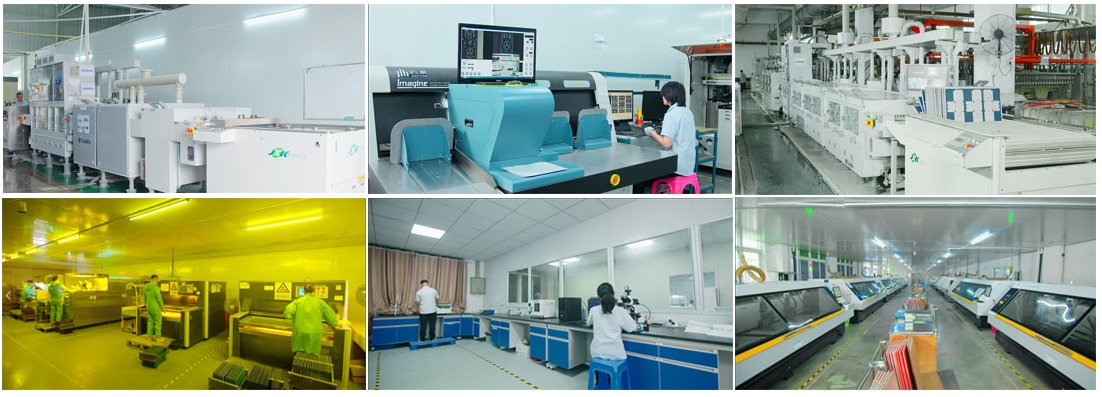
Our PCBA Prodcution Site

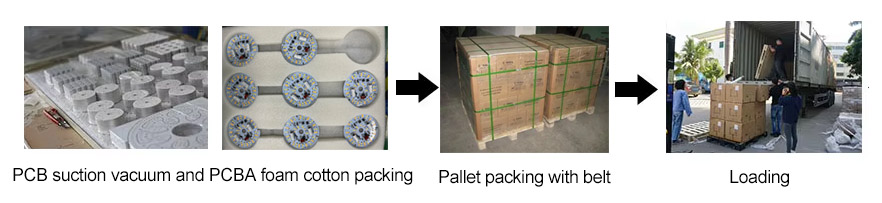
Packing and Shiping