| Key Atributes | Values | Key Atributes | Values |
| Color Temperature | Luminous Efficacy | Customized. We can design high luminous efficiency according to request | |
| Width/Length | Customized | Warranty | 5 years/3 years customized |
| Brand Name | GUOLI / Customized | Emitting Color | Customized |
| ens | Water proof | Available option, We have process of applying waterproofing adhesive | |
| Radiator | CRI | ||
| Certification | UL(CUL), IS09001&IS014001, IATF16949, REACH, RoHS | PCB surface process | OSP/HASL |
| Copper thickness | 0.5-3oz | PCB material | FR-4/Aluminum |
| Input | DC/AC | Light Source | LED |
| Support Dimmer | Available | Board Thickness | 0.2-4mm |
| DOB | Available | Service | One-stop turnkey service |
| LED CHIPS | Brand option: CREE,OSRAM,PHILIPS,NICHIA.,etc | Colour Accuracy Initially | Min. 3 SDCM |
| Power | Customized | ZHAGA | Available |
The core function of our medical UV disinfection lamp PCB module is to utilize the sterilization and inactivation capabilities of ultraviolet light to destroy the DNA/RNA structure of bacteria and viruses. This solution can be widely applied in hospital wards, operating rooms, laboratories, and medical device disinfection scenarios. Our parameter design and light source solution are entirely focused on sterilization efficiency, safety, and compliance.
I. Core Optical Parameter Requirements
1. Luminous Efficacy – Focus on Ultraviolet Photon Efficiency
Medical UV disinfection lamps do not focus on the lumen luminous efficacy (lm/W) of conventional lighting. The core indicator is ultraviolet light output efficiency, i.e., the ability of a unit of electrical energy to convert into effective bactericidal ultraviolet photons. Different ultraviolet bands need to be distinguished:
UVC Band (200~280nm): Highest bactericidal efficiency, especially 253.7nm, which is the golden bactericidal wavelength (matching the absorption peak of bacterial DNA). The photoelectric conversion efficiency of ultraviolet lamps in this band is ≥30% (mercury lamp) / ≥15% (LED);
UVA Band (320~400nm): Weaker bactericidal ability, mostly used for auxiliary disinfection or photocatalytic disinfection, photoelectric conversion efficiency ≥40%;
Key Supplement: In actual disinfection, the ultraviolet irradiance intensity (unit: μW/cm² or...) needs to be considered. 1. **Surface Irradiation Intensity (mW/cm²):** In medical settings, a surface irradiation intensity ≥2000 μW/cm² is required to ensure sterilization within the specified time (e.g., ≥10000 μW・s/cm² is needed to kill the novel coronavirus).
2. **Core Compliance Parameters:**
Wavelength Accuracy: The wavelength deviation of the UVC disinfection lamp must be ≤±5nm to ensure sterilization efficiency.
Irradiation Uniformity: The irradiation intensity deviation within the disinfection area must be ≤±20% to avoid incomplete local disinfection.
Ozone Release: Two types are available:
**Ozone-containing type:** Wavelength includes 185nm; ultraviolet light ionizes the air to produce ozone, which can kill bacteria in crevices, but ventilation is required after disinfection.
**Ozone-free type:** Wavelength is only 253.7nm; no ozone residue; suitable for environments where people stay for short periods (e.g., clinics). II. Key Considerations for Light Source Design
We recommend precise wavelength selection during the design phase to match the disinfection scenario.
* Operating rooms, sterile wards, and medical device disinfection: Prioritize 253.7nm UVC ozone-free light source to avoid ozone irritation to the human respiratory tract and achieve the highest sterilization efficiency.
* Wastewater disinfection, garbage station disinfection, and deep crevice disinfection: Select 253.7nm+185nm ozone-containing light source for dual sterilization with ultraviolet light and ozone, leaving no blind spots.
* Photosensitive material disinfection and food surface disinfection: Select the UVA band to avoid UVC damage to materials or food.
Safety Protection Design (Core Focus, Concerning Personal Safety)
Leakage Prevention Design: The lamp body must use a UV-proof housing, with a protective grille added to the light-transmitting surface to ensure that the UV leakage around the equipment is ≤0.2μW/cm² (compliant with occupational health standards);
Interlock Protection Devices: Equipped with a door control switch and a human body sensor, the power will be immediately cut off if anyone enters the disinfection area;
Warning Signs and Protective Accessories: The equipment surface is marked "UV Disinfection, Do Not Look Directly," and protective glasses and clothing are required to prevent UV burns to the skin and eyes;
Delayed Start Function: A 10-30 second delay start function is set to facilitate personnel evacuation from the disinfection area.
Weather Resistance and Reliability Design
Protection Rating: Medical environments are often humid, so the lamp body must have a protection rating of ≥IP65 to prevent moisture intrusion and short circuits.
Materials Resistant to UV Aging: The lamp body shell is made of UV-resistant ABS or stainless steel, and the light-transmitting cover uses high borosilicate glass (UV transmittance ≥90%) to prevent yellowing and cracking after long-term use.
Heat Dissipation Design (for UVC LED Lamps): UVC LED chip heat can cause wavelength drift and accelerated light decay. An aluminum substrate + fin heat dissipation system is required to ensure the chip junction temperature is ≤80℃. For mercury lamps, ballast heat dissipation is crucial to prevent overheating and burnout.
Control and Monitoring Design
Controllable Dosage: Equipped with a timer function, allowing setting irradiation time according to different disinfection targets (e.g., 30 minutes for medical device disinfection, 60 minutes for air disinfection).
Irradiation Dosage Monitoring: High-end equipment integrates a UV sensor to display real-time irradiation intensity and cumulative dose for easy assessment of disinfection effectiveness.
Lifespan Reminder: Automatic replacement reminder when the lamp/LED light decay exceeds 30% to ensure disinfection efficiency.
Compliance Requirements: Must possess a medical device registration certificate (Class I or Class II medical device) and comply with the "Regulations for Hygiene and Safety Evaluation of Disinfection Products"; Irradiation intensity must be calibrated regularly to ensure disinfection effectiveness meets standards.
III. LED Bead/Tube Specification Selection
UVC LED Beads (Environmentally friendly, portable, suitable for precise disinfection)
Mainstream Specifications
2835 UVC LED Beads: Single-bead power 0.1~0.5W, wavelength 250~280nm, UV light power ≥5mW, suitable for small disinfection equipment (such as mobile phone disinfection boxes, toothbrush sterilizers);
3030 UVC LED Beads: Single-bead power 1~3W, UV light power ≥20mW, suitable for medium-sized disinfection equipment (such as air sterilizers, endoscope disinfection boxes);
High-power UVC LED Beads: Single-bead power 5~10W, UV light power ≥100mW, suitable for large-area disinfection equipment (requires array arrangement);
Advantages: Mercury-free and environmentally friendly, instant start-up, precise wavelength, small size, can be designed into portable disinfection equipment;
Note: Photoelectric conversion efficiency is lower than mercury lamps, cost is higher; proper heat dissipation and waterproofing are required to avoid accelerated light decay.
3. Special Light Source Selection
We can customize disinfection LED beads of different wavelengths and brands according to customer needs.
Deep Ultraviolet LED Beads (222nm band): These belong to excimer ultraviolet light and can be used in environments with people (without burning skin or eyes). They are suitable for continuous disinfection in crowded places such as hospital clinics and school classrooms, but the cost is extremely high.
UVA LED Beads (365nm): Used for photocatalytic disinfection (with TiO₂ photocatalyst), suitable for air purification and wastewater disinfection.
Application
Hospital ward disinfection, operating room disinfection, laboratory disinfection, medical device disinfection
Our Company Profile
Guoli Optoelectronics has more than 10 years experiences in PCB, PCBA design and manufacturing, especially in LED application, we have strong engineers team for software and hardware development, and with 50+ patents in PCB products. We have 4 manufacturing bases and 600+ staffs, strong production capacity and fast response to make sure your project run efficiently. We have thousands of successful customers and cases globally, and serving the brands in industry worldwide.
We have complete quality control system and management system to keep our product quality, including UL, Rohs, ISO9001, ISO14001 and IATF16949.
Our Advantages
1. Save Time and Costs: GUOLI provides PCB design, sourcing, assembly, testing, and after-sales services, reducing communication and delivery time with different suppliers, improving efficiency, and lowering costs.
2. Reduce Errors: PCB design and assembly defects can cause project delays. GUOLI's one-stop PCBA service reduces various errors, including design, sourcing, and assembly mistakes, thereby improving quality control.
3. Strong Technical Team: GUOLI's one-stop PCBA service is typically equipped with an experienced technical team to help customers solve various technical problems and ensure timely project completion.
4. Unified Warranty and After-Sales Service: GUOLI's one-stop PCBA service provides unified warranty and after-sales service, helping to build long-term partnerships and achieve mutual benefit.
5. Customized Services: GUOLI's one-stop PCBA service can provide more personalized services based on customers' specific needs and requirements, and develop suitable circuit boards and system components.
Application
Fishing LED, Fishing light.,etc.
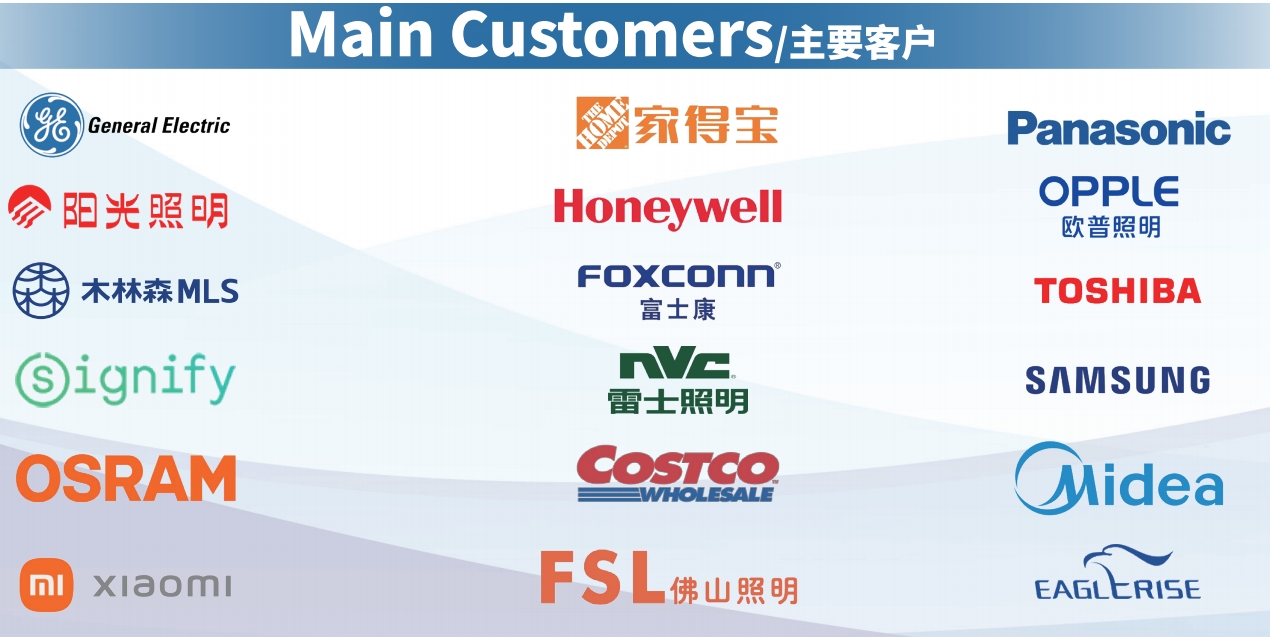
Our Customers Reference

Our PCB Prodcution Site
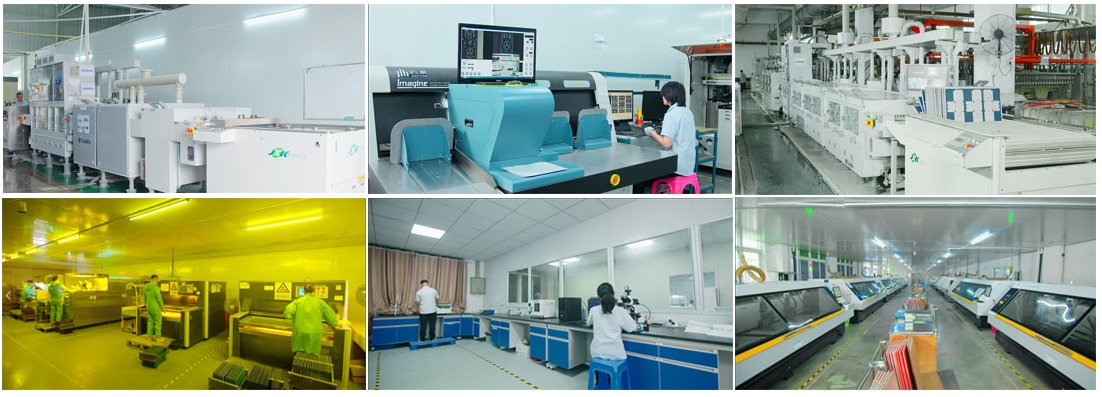
Our PCBA Prodcution Site

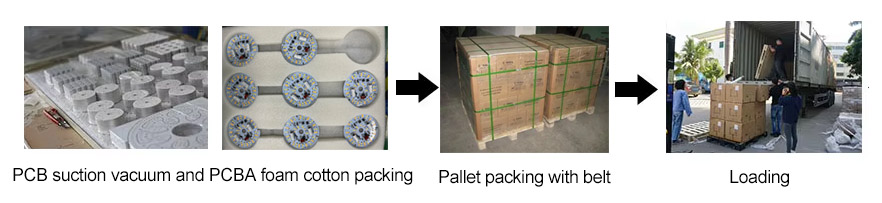
Packing and Shiping
| Key Atributes | Values | Key Atributes | Values |
| Color Temperature | Luminous Efficacy | Customized. We can design high luminous efficiency according to request | |
| Width/Length | Customized | Warranty | 5 years/3 years customized |
| Brand Name | GUOLI / Customized | Emitting Color | Customized |
| ens | Water proof | Available option, We have process of applying waterproofing adhesive | |
| Radiator | CRI | ||
| Certification | UL(CUL), IS09001&IS014001, IATF16949, REACH, RoHS | PCB surface process | OSP/HASL |
| Copper thickness | 0.5-3oz | PCB material | FR-4/Aluminum |
| Input | DC/AC | Light Source | LED |
| Support Dimmer | Available | Board Thickness | 0.2-4mm |
| DOB | Available | Service | One-stop turnkey service |
| LED CHIPS | Brand option: CREE,OSRAM,PHILIPS,NICHIA.,etc | Colour Accuracy Initially | Min. 3 SDCM |
| Power | Customized | ZHAGA | Available |
The core function of our medical UV disinfection lamp PCB module is to utilize the sterilization and inactivation capabilities of ultraviolet light to destroy the DNA/RNA structure of bacteria and viruses. This solution can be widely applied in hospital wards, operating rooms, laboratories, and medical device disinfection scenarios. Our parameter design and light source solution are entirely focused on sterilization efficiency, safety, and compliance.
I. Core Optical Parameter Requirements
1. Luminous Efficacy – Focus on Ultraviolet Photon Efficiency
Medical UV disinfection lamps do not focus on the lumen luminous efficacy (lm/W) of conventional lighting. The core indicator is ultraviolet light output efficiency, i.e., the ability of a unit of electrical energy to convert into effective bactericidal ultraviolet photons. Different ultraviolet bands need to be distinguished:
UVC Band (200~280nm): Highest bactericidal efficiency, especially 253.7nm, which is the golden bactericidal wavelength (matching the absorption peak of bacterial DNA). The photoelectric conversion efficiency of ultraviolet lamps in this band is ≥30% (mercury lamp) / ≥15% (LED);
UVA Band (320~400nm): Weaker bactericidal ability, mostly used for auxiliary disinfection or photocatalytic disinfection, photoelectric conversion efficiency ≥40%;
Key Supplement: In actual disinfection, the ultraviolet irradiance intensity (unit: μW/cm² or...) needs to be considered. 1. **Surface Irradiation Intensity (mW/cm²):** In medical settings, a surface irradiation intensity ≥2000 μW/cm² is required to ensure sterilization within the specified time (e.g., ≥10000 μW・s/cm² is needed to kill the novel coronavirus).
2. **Core Compliance Parameters:**
Wavelength Accuracy: The wavelength deviation of the UVC disinfection lamp must be ≤±5nm to ensure sterilization efficiency.
Irradiation Uniformity: The irradiation intensity deviation within the disinfection area must be ≤±20% to avoid incomplete local disinfection.
Ozone Release: Two types are available:
**Ozone-containing type:** Wavelength includes 185nm; ultraviolet light ionizes the air to produce ozone, which can kill bacteria in crevices, but ventilation is required after disinfection.
**Ozone-free type:** Wavelength is only 253.7nm; no ozone residue; suitable for environments where people stay for short periods (e.g., clinics). II. Key Considerations for Light Source Design
We recommend precise wavelength selection during the design phase to match the disinfection scenario.
* Operating rooms, sterile wards, and medical device disinfection: Prioritize 253.7nm UVC ozone-free light source to avoid ozone irritation to the human respiratory tract and achieve the highest sterilization efficiency.
* Wastewater disinfection, garbage station disinfection, and deep crevice disinfection: Select 253.7nm+185nm ozone-containing light source for dual sterilization with ultraviolet light and ozone, leaving no blind spots.
* Photosensitive material disinfection and food surface disinfection: Select the UVA band to avoid UVC damage to materials or food.
Safety Protection Design (Core Focus, Concerning Personal Safety)
Leakage Prevention Design: The lamp body must use a UV-proof housing, with a protective grille added to the light-transmitting surface to ensure that the UV leakage around the equipment is ≤0.2μW/cm² (compliant with occupational health standards);
Interlock Protection Devices: Equipped with a door control switch and a human body sensor, the power will be immediately cut off if anyone enters the disinfection area;
Warning Signs and Protective Accessories: The equipment surface is marked "UV Disinfection, Do Not Look Directly," and protective glasses and clothing are required to prevent UV burns to the skin and eyes;
Delayed Start Function: A 10-30 second delay start function is set to facilitate personnel evacuation from the disinfection area.
Weather Resistance and Reliability Design
Protection Rating: Medical environments are often humid, so the lamp body must have a protection rating of ≥IP65 to prevent moisture intrusion and short circuits.
Materials Resistant to UV Aging: The lamp body shell is made of UV-resistant ABS or stainless steel, and the light-transmitting cover uses high borosilicate glass (UV transmittance ≥90%) to prevent yellowing and cracking after long-term use.
Heat Dissipation Design (for UVC LED Lamps): UVC LED chip heat can cause wavelength drift and accelerated light decay. An aluminum substrate + fin heat dissipation system is required to ensure the chip junction temperature is ≤80℃. For mercury lamps, ballast heat dissipation is crucial to prevent overheating and burnout.
Control and Monitoring Design
Controllable Dosage: Equipped with a timer function, allowing setting irradiation time according to different disinfection targets (e.g., 30 minutes for medical device disinfection, 60 minutes for air disinfection).
Irradiation Dosage Monitoring: High-end equipment integrates a UV sensor to display real-time irradiation intensity and cumulative dose for easy assessment of disinfection effectiveness.
Lifespan Reminder: Automatic replacement reminder when the lamp/LED light decay exceeds 30% to ensure disinfection efficiency.
Compliance Requirements: Must possess a medical device registration certificate (Class I or Class II medical device) and comply with the "Regulations for Hygiene and Safety Evaluation of Disinfection Products"; Irradiation intensity must be calibrated regularly to ensure disinfection effectiveness meets standards.
III. LED Bead/Tube Specification Selection
UVC LED Beads (Environmentally friendly, portable, suitable for precise disinfection)
Mainstream Specifications
2835 UVC LED Beads: Single-bead power 0.1~0.5W, wavelength 250~280nm, UV light power ≥5mW, suitable for small disinfection equipment (such as mobile phone disinfection boxes, toothbrush sterilizers);
3030 UVC LED Beads: Single-bead power 1~3W, UV light power ≥20mW, suitable for medium-sized disinfection equipment (such as air sterilizers, endoscope disinfection boxes);
High-power UVC LED Beads: Single-bead power 5~10W, UV light power ≥100mW, suitable for large-area disinfection equipment (requires array arrangement);
Advantages: Mercury-free and environmentally friendly, instant start-up, precise wavelength, small size, can be designed into portable disinfection equipment;
Note: Photoelectric conversion efficiency is lower than mercury lamps, cost is higher; proper heat dissipation and waterproofing are required to avoid accelerated light decay.
3. Special Light Source Selection
We can customize disinfection LED beads of different wavelengths and brands according to customer needs.
Deep Ultraviolet LED Beads (222nm band): These belong to excimer ultraviolet light and can be used in environments with people (without burning skin or eyes). They are suitable for continuous disinfection in crowded places such as hospital clinics and school classrooms, but the cost is extremely high.
UVA LED Beads (365nm): Used for photocatalytic disinfection (with TiO₂ photocatalyst), suitable for air purification and wastewater disinfection.
Application
Hospital ward disinfection, operating room disinfection, laboratory disinfection, medical device disinfection
Our Company Profile
Guoli Optoelectronics has more than 10 years experiences in PCB, PCBA design and manufacturing, especially in LED application, we have strong engineers team for software and hardware development, and with 50+ patents in PCB products. We have 4 manufacturing bases and 600+ staffs, strong production capacity and fast response to make sure your project run efficiently. We have thousands of successful customers and cases globally, and serving the brands in industry worldwide.
We have complete quality control system and management system to keep our product quality, including UL, Rohs, ISO9001, ISO14001 and IATF16949.
Our Advantages
1. Save Time and Costs: GUOLI provides PCB design, sourcing, assembly, testing, and after-sales services, reducing communication and delivery time with different suppliers, improving efficiency, and lowering costs.
2. Reduce Errors: PCB design and assembly defects can cause project delays. GUOLI's one-stop PCBA service reduces various errors, including design, sourcing, and assembly mistakes, thereby improving quality control.
3. Strong Technical Team: GUOLI's one-stop PCBA service is typically equipped with an experienced technical team to help customers solve various technical problems and ensure timely project completion.
4. Unified Warranty and After-Sales Service: GUOLI's one-stop PCBA service provides unified warranty and after-sales service, helping to build long-term partnerships and achieve mutual benefit.
5. Customized Services: GUOLI's one-stop PCBA service can provide more personalized services based on customers' specific needs and requirements, and develop suitable circuit boards and system components.
Application
Fishing LED, Fishing light.,etc.
Our Customers Reference

Our PCB Prodcution Site

Our PCBA Prodcution Site

Packing and Shiping

content is empty!