close
Choose Your Site
Global
Social Media


| Key Atributes | Values | Key Atributes | Values |
| Color Temperature | 2700k, 3000K, 4000K, 5000K, 6500k | Luminous Efficacy | Customized. We can design high luminous efficiency according to request |
| Width/Length | ZHAGA Standard | Warranty | 5 years/3 years customized |
| Brand Name | GUOLI / Customized | Emitting Color | Customized |
| Lens | Available, with ZHAGA standard | Water proof | Available option, We have process of applying waterproofing adhesive |
| Radiator | ZHAGA Standard | CRI | 70/80/90 |
| Certification | UL(CUL), IS09001&IS014001, IATF16949, REACH, RoHS | PCB surface process | OSP/HASL |
| Copper thickness | ZHAGA Standard | PCB material | Aluminum |
| Input | DC/AC | Light Source | LED |
| Support Dimmer | Available | Board Thickness | ZHAGA Standard |
| DOB | Available | Service | One-stop turnkey service |
| LED CHIPS | Brand option: CREE,OSRAM,PHILIPS,NICHIA.,etc | Colour Accuracy Initially | 3 SDCM |
| Power | ZHAGA Standard | ZHAGA | Available |
Product Features
* Highly interchangeable components
* More resilient supply chain
* Convenient certification and application
* Promoting sustainable development
ZHAGA LED PCB modules standardize parameters such as size, luminous efficacy, lumens, and color temperature through book specifications. Modules for different application scenarios follow the technical requirements of the corresponding book. At the same time, with the core advantages of unified interface and interchangeable components, it has become a universal solution for the LED lighting industry. The specific parameters and advantages are as follows:
I. ZHAGA LED PCB Module Parameter Specifications
The ZHAGA Alliance divides module specifications for different application scenarios into multiple Books. Each Book sets clear standards for dimensions and photoelectric parameters. The core parameters are as follows:
Dimension Parameters
Linear Modules (Book 7): For linear and square modules for indoor lighting, standard lengths L28 (280mm) and L56 (560mm) are defined, and flexible cutting sizes of 70mm and 140mm are also provided. Width and thickness are divided into 18 specifications according to power rating, such as the common 1120×20mm and 172×49mm. Mounting hole positions and fixing methods are also uniformly specified to ensure that modules from different manufacturers can be adapted to the same lamp housing.
Downlight/Spotlight Modules (Book 8): Drum-shaped modules for downlight applications, with a maximum diameter of 95mm, height of 45mm, and luminous surface width of 59-71mm. The base uses an 85mm diameter PH J 85 D-type interface, installed via a rotating snap-on method, and its mechanical dimensions are fully compatible with lamp brackets.
Outdoor Modules (Book 18/20): Streetlight and tunnel light modules are typically 121×49mm, 223×49mm, etc., with a uniform thickness of 1.6mm. Specific requirements are also placed on the heat dissipation contact area of the mounting surface and the screw hole spacing to ensure compatibility with the heat dissipation structure of outdoor lighting fixtures.
Luminous Efficacy and Lumen Parameters
ZHAGA does not mandate fixed luminous efficacy values, but requires that the luminous efficacy deviation of modules of the same specification be ≤±5%. For example, the luminous efficacy of Book 7 indoor modules is generally ≥140lm/W, with high-end models reaching 190lm/W; the luminous efficacy of Book 8 downlight modules is ≥130lm/W, and the lumen maintenance rate (L70) must reach 100,000 hours at a rated temperature of 25℃.
Lumen output is graded according to module size. For example, a 2×4 module of 121×49mm has a lumen output of 2000lm, and a 2×8 module of 223×49mm has a lumen output of 4000lm. The lumen deviation of modules of the same specification from different manufacturers must be controlled within ±3% to ensure consistent brightness after replacement.
Color Temperature and Color Rendering Parameters
Color temperature covers 2700K (warm white) to 6500K (cool white), with mainstream specifications at 3000K, 4000K, and 5000K. Color tolerance within the same batch of modules is ≤3 SDCM, ensuring color consistency.
Color Rendering Index (Ra) is divided into basic (Ra≥80) and high-end (Ra≥90) levels. Modules for museum and commercial lighting require R9 (Red Reproduction Index) ≥80 and no ultraviolet emission, complying with the IEC 62471 photobiological safety standard.
II. Advantages and Benefits of Our ZHAGA LED PCB Modules
Component Interchangeability, Reduced Supply Chain Risk
Modules following the same ZHAGA catalogue are interchangeable across brands. For example, lighting manufacturers can freely switch between ZHAGA modules from Cree, NICHIA, and LUMILEDS without redesigning the lighting fixture structure, reducing dependence on a single supplier. Maintenance only requires replacing the module, eliminating the need to scrap the entire lamp.
Simplified design, shortened product launch cycle: Lighting designers no longer need to separately verify the mechanical compatibility, electrical compatibility, and thermal matching of modules; they can directly select ZHAGA-certified modules, eliminating the need for mold making and circuit debugging. This can shorten the product development cycle by more than 30%, making it especially suitable for the rapid mass production needs of small and medium-sized manufacturers.
Standardized production, reduced costs: The universal design of ZHAGA modules allows for mass production of components. For example, MCPCB substrates, connectors, lenses, and other accessories can be purchased in bulk, reducing production costs by 15%-20% compared to customized modules. Furthermore, fully certified ZHAGA modules can directly pass international certifications such as UL and CE, saving testing fees.
Full-scene adaptation, expanding the scope of applications From indoor commercial lighting (Book 7) to outdoor street lights (Book 18), from downlights (Book 8) to plant lights (Book 24), ZHAGA modules cover all categories of lighting scenarios and support extended functions such as dimming and intelligent control. They are compatible with mainstream control protocols such as DALI and 0-10V to meet the customized needs of different scenarios.
ZHAGA categorizes Color Rendering Index (CRI) requirements according to application scenarios, while also specifying auxiliary indicators such as color tolerance and special color reproduction indices. The core requirements are as follows: **Basic CRI Requirements:**
General Indoor Lighting Modules (e.g., Book 7 Linear Module):
CRI Ra≥80, meeting the color reproduction needs of general office and commercial lighting. For example, the 223×49mm 2×8 street light module is directly labeled as >80.
Outdoor Lighting Modules (Book 18/20):** Basic CRI Ra≥70 is sufficient. For example, some specifications of the 121×49mm 2×4 module have a CRI >70, suitable for street lights, tunnel lights, and other scenarios with lower color reproduction requirements.
Special Requirements for High-End Scenarios:**
High-end Commercial Lighting Modules for Museums, Shopping Malls, etc.:** Requires Ra≥90 and R9 (Red Reproduction Index)≥80, while also complying with the IEC 62471 photobiological safety standard, with no ultraviolet emission to avoid color distortion of exhibits and merchandise.
Color tolerance is uniformly controlled within ≤3 SDCM to ensure color consistency across batches and brands, avoiding color difference issues in lamps.
Lens Parameter Specifications
ZHAGA standardizes lens size adaptation, optical performance, and materials, with different specifications corresponding to different booklets:
* Size and Installation Adaptation
* Book 7 Linear Module: Adapts to 280mm long linear lenses, such as Asahi Optics' ZHAGA standard linear lens with a diameter of 280mm and a height of 40mm, perfectly matching the L28 (280mm) specification module. Installation clips and positioning holes are uniformly designed.
* Book 8 Downlight Module: Lens luminous surface width is limited to 59-71mm, adapting to 95mm diameter drum-shaped modules. It uses a clip-on fixing method for seamless connection with the lamp's optical bracket.
* Optical Performance Requirements
* Light Transmittance: Lens material transmittance ≥90%, high-end PMMA lenses can reach 93%, ensuring minimal luminous efficiency loss.
Beam Angle: The beam angle is specified according to the scene. Linear module lenses commonly have 60° and 120° beam angles, downlight module lenses have a narrow beam angle of 15°-45°, and outdoor modules have a wide beam angle of 120° (e.g., ZHAGA streetlight modules are labeled with a 120° beam angle).
Material and Environmental Adaptability
Indoor Module Lenses: Use PMMA material (e.g., PC-1250Z), operating temperature -40℃~+80℃, meeting indoor temperature and humidity requirements.
Outdoor Module Lenses: Use PC material, offering stronger weather resistance, extending the operating temperature range to -40℃~+120℃, and requiring a UL94 V-2 flame retardant rating and UV aging resistance.
Heatsink Parameter Specifications
ZHAGA specifies heatsink parameters based on thermal resistance, dimensions, and installation interfaces. Different power modules correspond to different heatsink specifications. Core specifications are concentrated in Book 10 (formerly Book 11) and other volumes.
Application
Outdoor lighting, Indoor lighting
Our Company Profile
Guoli Optoelectronics has more than 10 years experiences in PCB, PCBA design and manufacturing, especially in LED application, we have strong engineers team for software and hardware development, and with 50+ patents in PCB products. We have 4 manufacturing bases and 600+ staffs, strong production capacity and fast response to make sure your project run efficiently. We have thousands of successful customers and cases globally, and serving the brands in industry worldwide.
We have complete quality control system and management system to keep our product quality, including UL, Rohs, ISO9001, ISO14001 and IATF16949.
Our Advantages
1. Save Time and Costs: GUOLI provides PCB design, sourcing, assembly, testing, and after-sales services, reducing communication and delivery time with different suppliers, improving efficiency, and lowering costs.
2. Reduce Errors: PCB design and assembly defects can cause project delays. GUOLI's one-stop PCBA service reduces various errors, including design, sourcing, and assembly mistakes, thereby improving quality control.
3. Strong Technical Team: GUOLI's one-stop PCBA service is typically equipped with an experienced technical team to help customers solve various technical problems and ensure timely project completion.
4. Unified Warranty and After-Sales Service: GUOLI's one-stop PCBA service provides unified warranty and after-sales service, helping to build long-term partnerships and achieve mutual benefit.
5. Customized Services: GUOLI's one-stop PCBA service can provide more personalized services based on customers' specific needs and requirements, and develop suitable circuit boards and system components.
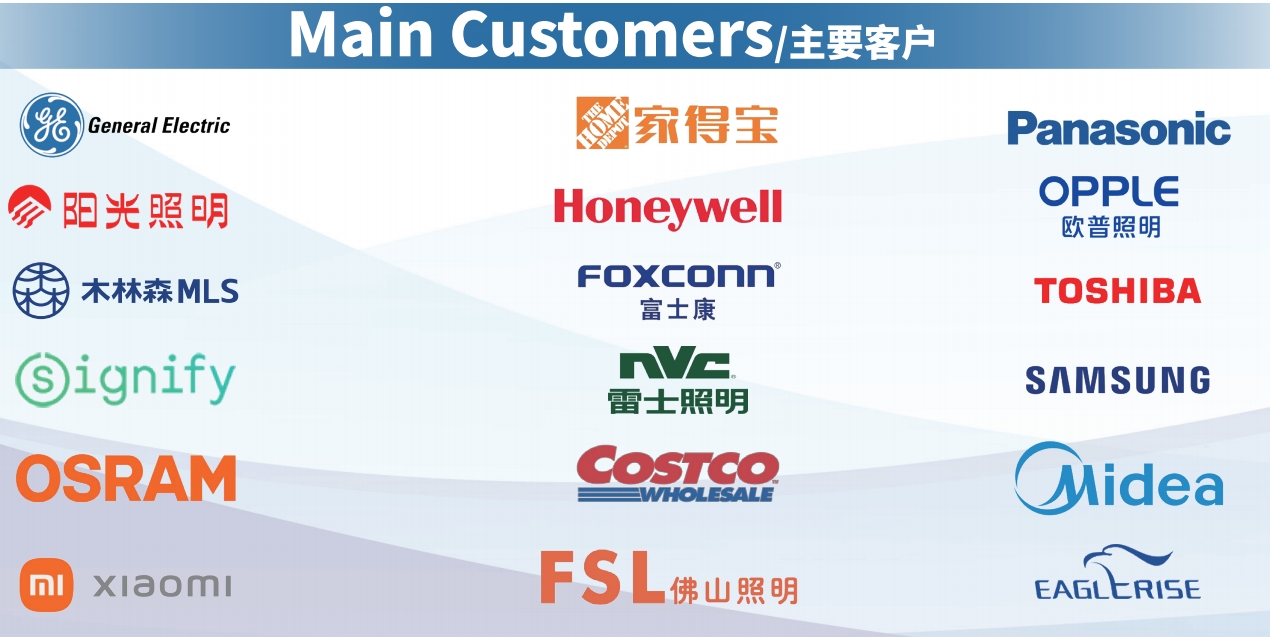
Our Customers Reference
Our PCB Prodcution Site
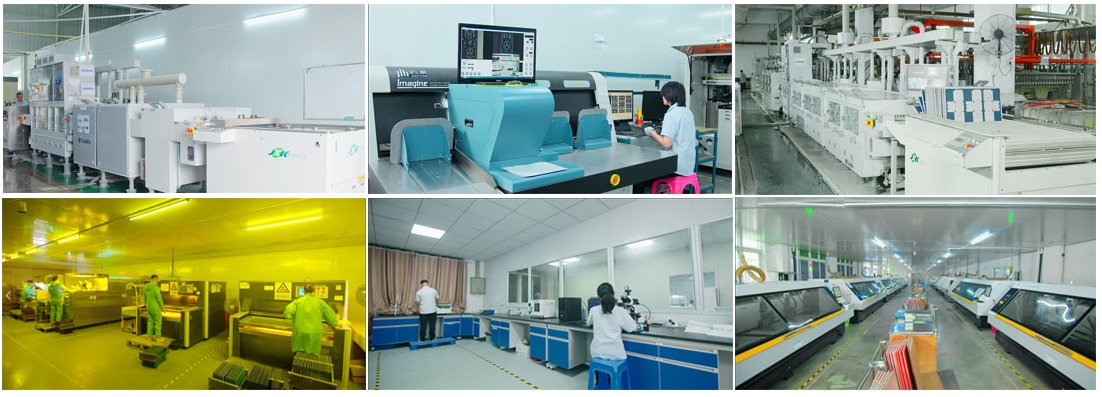
Our PCBA Prodcution Site

Packing and Shiping