close
Choose Your Site
Global
Social Media


Specification Details
Brand Name: GUOLI / Customized
Luminous Efficacy: Customized. We can design high luminous efficiency according to request
Width/Length: Customized
Warranty: 5 years/3 years customized
Lens: Available, customized assemble
Water proof: Available option, We have process of applying waterproofing adhesive
Radiator: Available
Certification: UL(CUL), IS09001&IS014001, IATF16949, REACH, RoHS PCB
Input: AC
Light Source: LED
Color Temperature:
3500K, 5000K & Cusztomized
CRI: 80/90/95
LED CHIPS: Brand option: CREE,OSRAM,PHILIPS,NICHIA., Chinese brands., etc
Emitting Color: Customized
Support Dimmer: Available
Surface Process: OSP/HASL
Copper thickness: 0.5-3oz
PCB material: FR-4/Aluminum
Board Thickness: 0.2-4mm
DOB: Available
Service: we have standard module and customized design service, component sourcing, smt for you, One-stop turnkey service
ZHAGA: Available
Colour Accuracy Initially: Min. 3 SDCM
Features
1. High-density integration, high space utilization, and excellent thermal conductivity.
2. Lightweight structure. The module uses standardized interfaces, resulting in low maintenance costs.
3. Integrated drive circuitry, extending module lifespan.
4. High efficiency and energy saving, with photoelectric conversion efficiency exceeding 90%, especially suitable for 24-hour operation scenarios such as plant factories.
5. Precise supplemental lighting, improving plant quality and yield through customized spectrum.
6. Long lifespan, reducing replacement frequency. With the heat dissipation protection of the metal-based PCB, the actual service life can exceed 30,000 hours, ensuring stable long-term supplemental lighting effects without the need for frequent adjustments to lighting parameters.
7. Low heat radiation
8. Environmentally friendly and safe, meeting green planting standards; free of heavy metal pollutants such as mercury and lead; easily recyclable after disposal; meets RoHS, REACH, and other environmental standards.
Application
Plant grow LED, Seed Starting, Bloom, VEG, Vegetable Flower Fruit Greenhouse.,etc.

FAQ
Q1: Where are you headquartered?
Foshan, China(south of China)
Q2: Are you a trading company or manufacturer?
We are a PCB&PCBA manufacturer with 10+ years experiences, professional in LED industry.
Q3: What countries do you export your products to?
We export our PCB/PCBA solutions to more than 30 countries, including USA,EUROPE,MIDDLE EAST,AUSTRALIA,AGENTINA,BRAZIL and so on.
Q4: What is your lead time/production time?
1-3 weeks
Q5:Do you offer free samples?
Free in 3 new models
Q6:What's your MOQ?
100pcs
Q7:How's your quality control?
We have 100% unit inspection, process:
Strictly Select Suppliers->IQC->IPQC->ICT->AOI TEST->X-ray Test->Function Test
Optical Performance Testing including
1.Luminous Flux and Luminous Efficacy Testing (Integrating Sphere)
2.Spectrum and Color Temperature Testing
3Light Intensity Distribution and Uniformity Testing
4.Light Decay Testing (High-Temperature Aging)
Thermal Performance Testing (Ensuring Service Life)
Reliability Testing (Simulating Real-World Usage Environments)
1.High and Low Temperature Cycling Testing
2.Damp Heat Testing
3.Long-Term Aging Testing
4.Sample Testing for Continuous Illumination
The core objective of our plant grow light PCB module solution is to accurately simulate the solar spectrum, providing precise light energy support for plant photosynthesis. The light source design revolves around the spectral requirements of plant growth stages
I. Core Optical Parameter Requirements
1. Color Rendering Index (CRI, Ra)
Plant grow lights do not rely on the conventional Color Rendering Index (Ra) because Ra is based on human color perception. Plant photosynthesis primarily involves absorbing red light (600~700nm) and blue light (400~500nm), with less absorption of green light (500~600nm).
Our designs typically cater to both "plant lighting + human observation" scenarios (such as home gardening and plant factory inspections), requiring an Ra ≥ 60 to meet basic color recognition needs. For professional plant cultivation scenarios (such as greenhouse supplemental lighting and tissue culture rooms), Ra is not a primary concern; the focus is on the spectral wavelength and its proportion.
2. Luminous Efficacy (lm/W) – Differentiating Between “Photosynthetic Efficacy” and “Visual Efficacy” The luminous efficacy of plant grow lights depends on the photosynthetic photon flux efficiency (PPE, μmol/J).
Photosynthetic photon flux efficiency (PPE): Measures the efficiency of converting unit electrical energy into photons that can be absorbed by plants (400~700nm). This is a core indicator for grow lights.
Conventional LED grow lights: PPE ≥ 2.5 μmol/J;
High-end energy-saving grow lights (such as those using flip-chip technology): PPE ≥ 3.0 μmol/J;
We can customize production, but note: the higher the PPE, the higher the supplemental lighting efficiency, and the lower the energy consumption cost of cultivation.
3. Color Temperature (CCT) – For supplementary reference only
High color temperature (5000K~6500K): High proportion of blue light, suitable for seedlings and vegetative growth stages (promotes stem and leaf differentiation, prevents excessive vegetative growth); Low color temperature (2700K~3500K): High proportion of red light, suitable for flowering and fruiting stages (promotes flowering and fruit enlargement); Professional planting scenarios: Directly choose full-spectrum lamps or red-blue light ratio lamps; we don't need to worry about the color temperature value.
4. Core Parameter Supplement – Photosynthetic Photon Flux Density (PPFD)
PPFD refers to the number of photosynthetically active photons arriving per unit area per unit time, measured in μmol/(m²·s). It directly determines the effectiveness of supplemental lighting:
Leafy vegetables (lettuce, spinach): PPFD 100~300 μmol/(m²·s);
Fruit vegetables (tomato, cucumber): PPFD 300~800 μmol/(m²·s);
Tissue culture seedlings: PPFD 50~150 μmol/(m²·s).
II. Key Considerations for Light Source Design
Precise Spectrum Matching to Plant Growth Stages
* Seedling Stage/Vegetative Growth Stage: Requires a high proportion of blue light (400~500nm). Blue light can inhibit excessive vegetative growth and promote root development. Recommended ratio: 40%~50% blue light + 50%~60% red light.
* Flowering Stage/Fruiting Stage: Requires a high proportion of red light (600~700nm). Red light can promote flowering and fruiting. Recommended ratio: 60%~80% red light + 20%~40% blue light.
* Throughout the Growth Cycle: Choose a full-spectrum plant light, covering the spectral range of 400~700nm, simulating sunlight and meeting the growth needs of most plants.
Avoiding Light Inhibition and Heat Damage
The distance between the light source and the plant needs to be properly controlled (30-50cm for leafy vegetables, 50-80cm for fruiting vegetables). Too close a distance will lead to excessively high PPFD, causing light inhibition (plants close their stomata and stop photosynthesis). Our high-power plant light PCB solutions have a heat dissipation design to prevent the high temperature of the light source from baking the plant leaves, causing yellowing and wilting.
Illumination Uniformity Design
Utilizing a matrix-style LED arrangement or lens-based light distribution design, we ensure PPFD uniformity ≥80% within the planting area, avoiding excessively strong or weak light in certain areas, which can lead to uneven plant growth. For large-area planting scenarios (such as greenhouses), we recommend using suspended strip plant lights with multiple lights arranged in parallel to reduce blind spots.
Glare Prevention and Safety Protection
If personnel are involved in inspections, anti-glare masks should be used to prevent direct blue light from causing visual fatigue. In humid environments such as greenhouses and polytunnels, plant lights must meet an IP65 or higher protection rating to prevent moisture and dew from entering and causing short circuits. III. LED Chip Selection
Plant grow lights primarily use high-power SMD surface-mount LED chips and imitation lumen LED chips. Some high-end products use COB integrated LED chips. Specific selection criteria are as follows:
1. Mainstream SMD Surface-Mount LED Chips
3030 Plant LED Chip (Most Commonly Used)
Specifications: Single chip power 0.5~1W, red light wavelength 660nm, blue light wavelength 450nm (precisely matching plant absorption peaks);
Advantages: Stable light efficiency, good heat dissipation, suitable for modular splicing, flexible adjustment of red and blue light ratio;
Suitable Scenarios: Home growing lights, small plant factory supplemental lighting.
2835 Plant LED Chip
Specifications: Single chip power 0.2~0.5W, small size, suitable for high-density arrangement;
Advantages: Low cost, uniform light, suitable for making thin and light panel-type plant lights;
Suitable Scenarios: Desktop planting boxes, small-area supplemental lighting in tissue culture rooms.
2. **Lumen-like Plant Light Beads**
Specifications: 1-3W per bead, strong red/blue monochromaticity, high photon flux;
Advantages: High PPE value (≥3.0 μmol/J), superior supplemental lighting efficiency compared to low-power beads;
Suitable for: High-power greenhouse supplemental lighting, supplemental lighting for tall plants (e.g., tomatoes, peppers);
Note: Requires an aluminum substrate and finned heat dissipation to prevent excessive junction temperature and light decay.
3. **COB Integrated Plant Light Beads**
Specifications: 10-50W per bead, integrates multiple red and blue light chips, uniform light output surface;
Advantages: Large illumination area, no complex arrangement required, suitable for high-power circular plant lights;
Note: Requires high-precision optical design, needs a reflector to avoid uneven spectral distribution.
4. Special LED Bead Selection
Far-infrared LED beads (730nm): Used with red and blue light, they can adjust the flowering cycle of plants and are suitable for short-day plants (such as chrysanthemums and strawberries);
Full-spectrum COB LED beads: Covering a spectrum of 400~700nm, close to sunlight, they are suitable for all plant growth cycles and do not require lamp replacement.
Our Company Profile
Guoli Optoelectronics has more than 10 years experiences in PCB, PCBA design and manufacturing, especially in LED application, we have strong engineers team for software and hardware development, and with 50+ patents in PCB products. We have 4 manufacturing bases and 600+ staffs, strong production capacity and fast response to make sure your project run efficiently. We have thousands of successful customers and cases globally, and serving the brands in industry worldwide.
We have complete quality control system and management system to keep our product quality, including UL, Rohs, ISO9001, ISO14001 and IATF16949.
Our Advantages
1. Save Time and Costs: GUOLI provides PCB design, sourcing, assembly, testing, and after-sales services, reducing communication and delivery time with different suppliers, improving efficiency, and lowering costs.
2. Reduce Errors: PCB design and assembly defects can cause project delays. GUOLI's one-stop PCBA service reduces various errors, including design, sourcing, and assembly mistakes, thereby improving quality control.
3. Strong Technical Team: GUOLI's one-stop PCBA service is typically equipped with an experienced technical team to help customers solve various technical problems and ensure timely project completion.
4. Unified Warranty and After-Sales Service: GUOLI's one-stop PCBA service provides unified warranty and after-sales service, helping to build long-term partnerships and achieve mutual benefit.
5. Customized Services: GUOLI's one-stop PCBA service can provide more personalized services based on customers' specific needs and requirements, and develop suitable circuit boards and system components.
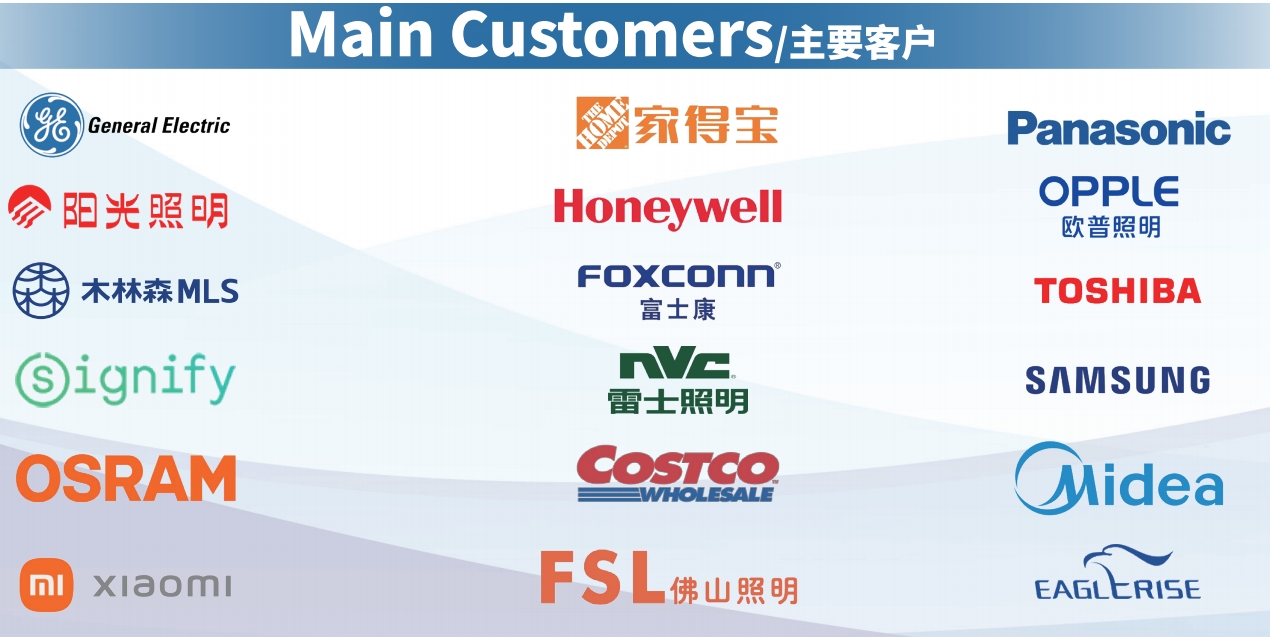
Our Customers Reference
Our PCB Prodcution Site
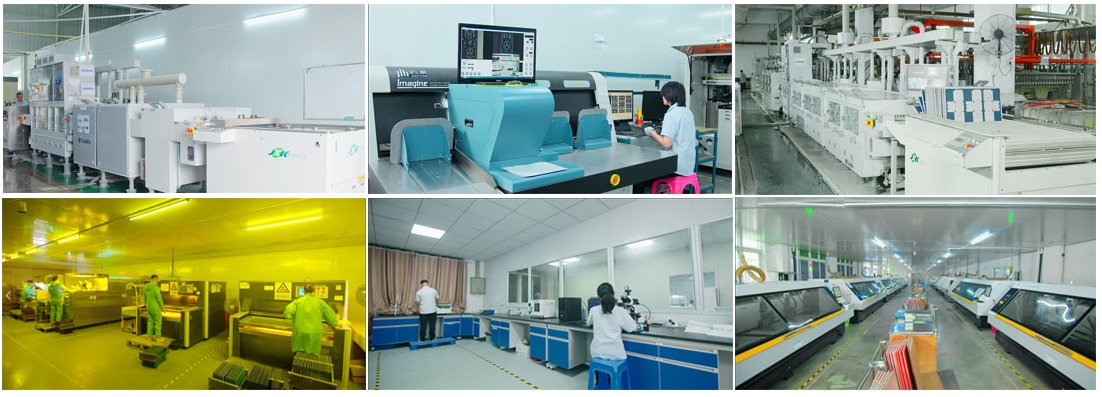
Our PCBA Prodcution Site

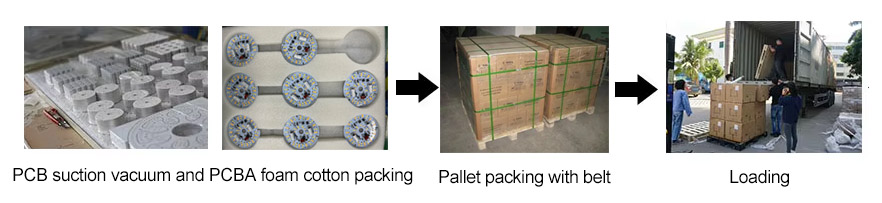
Packing and Shiping