close
Choose Your Site
Global
Social Media


| Key Atributes | Values | Key Atributes | Values |
| Color Temperature | 2700k, 4000k, 5000k, 6500k & Cusztomized | Luminous Efficacy | Customized. We can design high luminous efficiency according to request |
| Diameter | Customized | Warranty | 5 years/3 years customized |
| Brand Name | GUOLI / Customized | Emitting Color | Customized |
| Lens | Available option, need your lens drawing | Water proof | Available option, We have process of applying waterproofing adhesive |
| Application | Indoor/Outdoor | CRI | 80/90/95 |
| Certification | UL(CUL), IS09001&IS014001, IATF16949, REACH, RoHS | PCB surface process | OSP/HASL |
| Copper thickness | 0.5-3oz | PCB material | Aluminum |
| Input | DC/AC | Light Source | LED |
| Support Dimmer | Available | Board Thickness | 0.2-4mm |
| DOB Design | Option | Service | One-stop turnkey service |
| LED CHIPS | Brand option:CREE/OSRAM/NICHIA/PHILIPS & others | Colour Accuracy Initially | Min. 3 SDCM |
| Power | Customized | ZHAGA | Available |
Product Features
* High brightness, high color rendering index (CRI), long lifespan
* Higher light absorption efficiency, uniform brightness and color
* Compact modular design, facilitating luminaire design and installation
* Utilizes next-generation phosphor technology, enabling controllable color temperature and CRI, and excellent light color consistency
*Can be used with a focusing lens assembly
Our stage lighting (PAR lights, moving head lights, beam lights, front lights, etc.) LED PCB modules are characterized by high color fidelity, high brightness output, flexible and controllable light patterns, and adaptability to dynamic performance scenarios. Our designs, light source solutions, and focusing lens designs are dedicated to creating a stage atmosphere, realistically portraying actors' facial colors, and accurately projecting special effects, balancing professionalism and reliability.
I. Core Optical Parameter Requirements
1. Color Rendering Index (CRI, Ra & R9/R15)
Color rendering is a core indicator of stage lighting, directly determining the color reproduction of actors' skin tones, costumes, and props. Requirements vary significantly depending on the stage setting:
* **Basic Stages (Small Theaters, Conference Room Performances):** Ra ≥ 85, R9 (Red Color Rendering Index) ≥ 30, ensuring basic reproduction of red costumes and scenery, avoiding color cast;
* **Mid-to-High-End Stages (Theaters, Concert Halls, Variety Show Studios):** Ra ≥ 90, R9 ≥ 50, R15 (Skin Color Rendering Index) ≥ 85, accurately reproducing the texture of actors' faces, avoiding "pale complexions" or "reddish distortion," satisfying the visual experience of the live audience;
* **Professional Film and Television Stages (Live Broadcasts, Recorded Galas):** Ra ≥ 95, full-spectrum design (R1-R15 all ≥ 90), color gamut coverage ≥ NTSC 90%, matching the color acquisition characteristics of cameras, meeting the high-precision requirements of post-production color grading. 2. Luminous Efficacy (lm/W) Stage lights need to balance high brightness and energy consumption control. Luminous efficacy indicators must differentiate between chip luminous efficacy and system luminous efficacy (including losses from optical components, color filters, and special effects components):
White LED Chip Luminous Efficacy: ≥150lm/W (Laboratory conditions);
Stage Light System Luminous Efficacy:
Front Lights, PAR Lights (primarily white light, no complex effects): System luminous efficacy ≥90lm/W;
Moving Head Lights, Beam Lights (including prisms, pattern plates, and color wheels): System luminous efficacy ≥70lm/W (Special effects components cause approximately 30% light loss);
Key Supplement: Stage lights focus more on actual luminous flux output. A standard 200W PAR light has a luminous flux ≥20,000lm, while a high-power 500W moving head light can reach over 50,000lm, meeting long-distance projection requirements.
3. Color Temperature (CCT) Stage lighting color temperature must be flexibly adjustable to suit different performance atmospheres and support precise temperature control:
Standard adjustable range: 2700K~6500K, supporting stepless adjustment or step-by-step switching (warm white/neutral white/cool white);
2700K~3500K (warm white): Suitable for lyrical musicals and plays, creating a warm and immersive atmosphere;
4000K~5000K (neutral white): Suitable for live broadcasts and conference performances, ensuring natural and realistic skin tones;
5500K~6500K (cool white): Suitable for rock and technological performances, enhancing visual impact;
Special requirements: Color temperature consistency of lights in the same batch ≤ ±100K, color tolerance ≤ 3SDCM, avoiding the problem of "uneven color blocks" in stage lighting.
4. Other Key Parameters
Beam Angle: Supports flexible adjustment; PAR lights typically offer 15°~60° adjustment, beam lights can achieve narrow beam focusing from 0°~25°, and area lights offer wide beam floodlight from 60°~120°;
Dim Performance: Supports smooth dimming from 0~100% (flicker-free), compatible with the DMX512 control protocol, meeting dynamic effects such as gradual brightening, dimming, and flickering;
Color Saturation: RGB/RGBW LEDs must ensure monochromatic light purity, color gamut coverage ≥ 90% of NTSC, and support precise color tuning for 16.7 million colors.
II. Design Considerations for LED Stage Light Sources
Stage lights must withstand harsh conditions such as high-frequency start/stop, prolonged full-power operation, and frequent movement and vibration. The core design considerations for the light source are stability, heat dissipation, and optical flexibility. Specific points are as follows:
* Optical System Matching: Balancing precise beam pattern with special effects compatibility.
* White Stage Lights: Utilizing high-precision reflectors (vacuum-plated aluminum, reflectivity ≥95%) or aspherical lenses to achieve adjustable beam focusing/diffusion; front lights require the addition of diffusers to avoid strong shadows on actors' faces.
* RGB/RGBW Colored Stage Lights: Employing a color wheel + uniform light cavity design to ensure color mixing uniformity and avoid color deviation; beam lights require pre-installed prism and pattern panel interfaces to support beam splitting, pattern projection, and other special effects.
* Anti-Glare Design: Front lights require a ≥20° shading angle and a honeycomb mesh cover to prevent direct glare from the audience's eyes.
Heat Dissipation Design: Controlling Junction Temperature to Prevent High-Temperature Light Decay
Stage lights often operate at full power for 3-4 hours (e.g., during concerts). The LED chip junction temperature must be controlled at ≤110℃; otherwise, it will lead to color temperature drift, a sharp drop in luminous efficacy, and a shortened lifespan.
Heat Dissipation Solution Selection:
Small to Medium Power PAR Lights (100-200W): Aluminum substrate + finned heat dissipation + temperature-controlled air cooling; fan speed adjustable to reduce operating noise.
High Power Moving Head Lights/Beam Lights (300-500W): Heat pipe cooling + high-density fins + dual-fan airflow for rapid heat dissipation, preventing burns to operators from overheating the lamp housing.
Portable Stage Lights: Utilizes an integrated die-cast aluminum housing, balancing heat dissipation and structural strength, enhancing vibration and impact resistance.
Drive and Control Design: Adapting to Dynamic Stage Requirements
The driver power supply must support a wide voltage input (AC 100~240V) to adapt to different performance venues; it features a built-in constant current driver with output current accuracy ≤±2%, preventing voltage fluctuations from causing brightness/color temperature instability;
It supports stage control protocols such as DMX512 and RDM, enabling multi-lamp synchronization and group control to meet complex performance lighting arrangements;
Built-in overcurrent, overvoltage, and short-circuit protection to handle current surges from frequent stage starts and stops.
Weather Resistance and Structural Design: Adapting to Mobile Performance Scenarios
Protection Rating: Indoor stage lights ≥IP20, outdoor performance lights must be upgraded to IP65 to prevent rain and dust intrusion;
Structural Strength: The lamp body is made of high-strength aluminum alloy, and the connectors are made of stainless steel to withstand vibration and impact during transportation and installation;
LED Encapsulation: UV-resistant silicone encapsulation is used to prevent yellowing and cracking of the encapsulation due to prolonged exposure to strong light.
III. Stage Light LED Chip Specifications Selection
Stage light LED chips are divided into two main categories: white high CRI chips and RGB/RGBW color chips. Selection should consider power, luminous efficacy, and color requirements:
1. White High CRI Chips
High-power imitation lumen chips (mainstream choice)
Specifications: Single chip power 1~3W, luminous flux 120~300lm/chip, Ra≥90 (high CRI Ra≥95), color temperature adjustable from 2700K to 6500K;
Advantages: High brightness, good heat dissipation, suitable for arraying into high-power modules (e.g., a 200W PAR light uses 72 3W chips);
Suitable scenarios: Stage lights that primarily use white light, such as front lights, PAR lights, and moving head lights.
COB Integrated LED Beads (High-end Surface Lighting)
Specifications: Single chip power 50~200W, emitting surface Φ15~Φ30mm, Ra≥95, luminous efficacy≥130lm/W;
2. RGB/RGBW Colored LED Beads
3535 RGB SMD LED Beads (Mainstream Choice)
Specifications: Single chip power 1W, red wavelength 620~630nm, green wavelength 520~530nm, blue wavelength 450~460nm, high color purity;
Advantages: Small size, suitable for high-density matrix arrangement, supports precise color mixing, compatible with beam lights and color-changing lights;
Key Requirements: Wavelength deviation ≤±5nm, ensuring color consistency within the same batch of LED beads.
High-Power RGBW Lumen-Style LED Chips
Specifications: Single chip power 3~5W, integrated red, green, blue, and white four-color chips, supports independent dimming;
Advantages: High brightness, suitable for long-distance colored beam projection, compatible with large concert moving head lights.
3. Core Performance Requirements of the LED Chips
Temperature Resistance: Operating junction temperature ≤150℃, meeting the high-temperature conditions of stage lights;
Lifespan: L70 lifespan ≥30,000 hours, adaptable to the frequent use requirements of stage lights;
Vibration Resistance: Meets 10~2000Hz vibration test requirements, with no solder joint detachment or abnormal light decay.
Our LED light source modules can be used in conjunction with focusing lens assemblies and are sold as a set.
Our Company Profile
Guoli Optoelectronics has more than 10 years experiences in PCB, PCBA design and manufacturing, especially in LED application, we have strong engineers team for software and hardware development, and with 50+ patents in PCB products. We have 4 manufacturing bases and 600+ staffs, strong production capacity and fast response to make sure your project run efficiently. We have thousands of successful customers and cases globally, and serving the brands in industry worldwide.
We have complete quality control system and management system to keep our product quality, including UL, Rohs, ISO9001, ISO14001 and IATF16949.
Our Advantages
1. Save Time and Costs: GUOLI provides PCB design, sourcing, assembly, testing, and after-sales services, reducing communication and delivery time with different suppliers, improving efficiency, and lowering costs.
2. Reduce Errors: PCB design and assembly defects can cause project delays. GUOLI's one-stop PCBA service reduces various errors, including design, sourcing, and assembly mistakes, thereby improving quality control.
3. Strong Technical Team: GUOLI's one-stop PCBA service is typically equipped with an experienced technical team to help customers solve various technical problems and ensure timely project completion.
4. Unified Warranty and After-Sales Service: GUOLI's one-stop PCBA service provides unified warranty and after-sales service, helping to build long-term partnerships and achieve mutual benefit.
5. Customized Services: GUOLI's one-stop PCBA service can provide more personalized services based on customers' specific needs and requirements, and develop suitable circuit boards and system components.
Application
PAR lights, moving head lights, beam lights, front lights., etc.
Our Customers Reference
Our PCB Prodcution Site
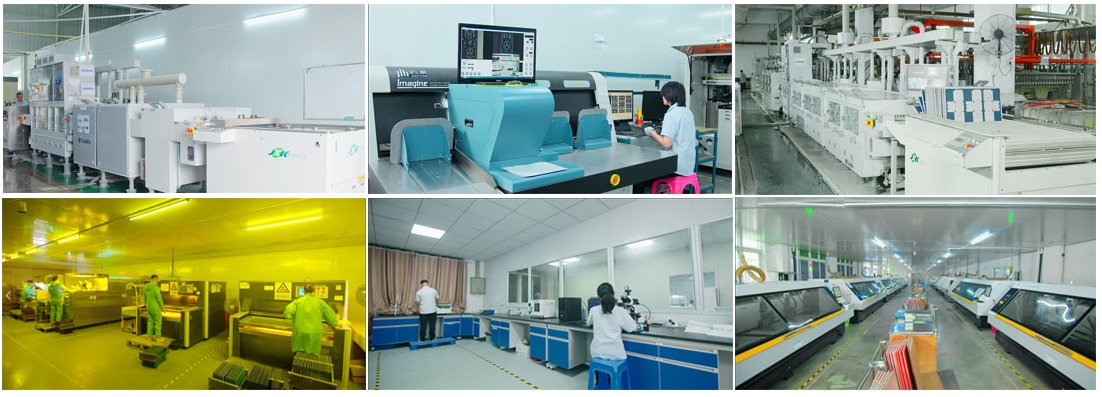
Our PCBA Prodcution Site

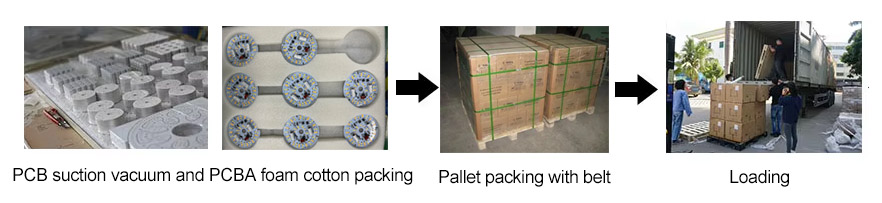
Packing and Shiping